

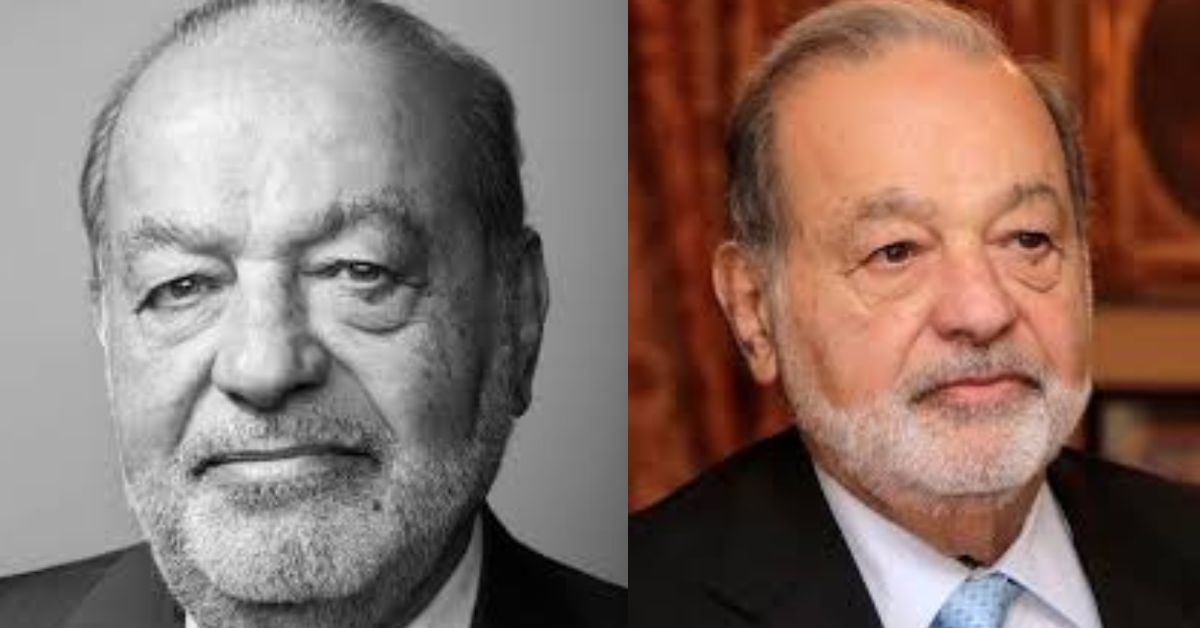
Carlos Slim is worth $123.6 billion as of mid-2026, making him the richest person in Mexico and Latin America and the 14th richest person on earth.
The Mexican businessman built his fortune from a single real estate firm bought in 1965 into a sprawling empire that now touches phone service, banking, mining, and retail across the Americas.
Slim’s story is not the usual tech-fortune tale. He is 86 years old, still active in his companies, and his wealth has grown for six decades through patient buying, not flashy bets. Here’s everything worth knowing about how he built it, what he owns now, and why his net worth keeps climbing even as other billionaires’ fortunes swing wildly.
Carlos Slim Profile Summary
| Full Name | Carlos Slim Helu |
| Net Worth (2026) | $123.6 billion (Forbes real-time, #14 in the world) |
| Date of Birth | January 28, 1940 |
| Age | 86 |
| Birthplace | Mexico City, Mexico |
| Nationality | Mexican |
| Source of Wealth | Telecom, real estate, banking, retail (self-made) |
| Main Companies | America Movil, Grupo Carso, Grupo Financiero Inbursa |
| Marital Status | Widowed |
| Children | 6 |
| Education | Bachelor’s degree, National Autonomous University of Mexico |
What Is Carlos Slim Net Worth and How Does It Work
Carlos Slim’s fortune is not sitting in a bank account. It is spread across shares in publicly traded companies, mainly America Movil, the phone and internet company he built out of Mexico’s old state telecom monopoly. When those stocks rise or fall, his net worth moves with them, sometimes by billions of dollars in a single week.
Forbes tracks his wealth daily by multiplying his share count in each company by the current stock price, then adding cash and private holdings on top.
That’s why you’ll see slightly different numbers on different sites: Forbes had him at $123.6 billion in mid-2026, while Bloomberg’s index and other trackers have shown figures ranging from roughly $99 billion to $125 billion depending on the date and the stock prices used that day.
This gap is normal for any billionaire whose wealth sits mostly in stock rather than cash.
A publicly traded company’s share price can move several percentage points in a single trading session on nothing more than an earnings report or an interest rate announcement, and because Slim’s stake in America Movil is worth tens of billions of dollars, even a small percentage swing translates into a large dollar swing.
Anyone quoting a single exact figure as permanent is oversimplifying how these trackers actually work.
The bulk of his money comes from three places:
- America Movil, Latin America’s largest mobile phone carrier, where he holds the title of honorary lifetime chairman
- Grupo Carso, his family holding company covering construction, retail, mining, and industrial businesses
- Grupo Financiero Inbursa, a Mexican banking and insurance group
Beyond these three core holdings, Slim and his family also carry smaller stakes in international names such as BT Group in the United Kingdom, Fomento de Construcciones y Contratas in Spain, and PBF Energy in the United States. None of these approach the scale of his Mexican holdings, but they add geographic spread that helps cushion his overall fortune from problems specific to any one country’s economy.
Why Carlos Slim’s Net Worth Matters in 2026
Slim’s wealth is a useful barometer for the Mexican economy itself. His companies account for a huge share of the value traded on the Mexican Stock Exchange, so when his net worth swings, it usually reflects something bigger happening in Mexican markets, not just his personal fortune.
He also matters because of how long he has stayed near the top. Slim was ranked the richest person in the world by Forbes from 2010 through 2013, a stretch few billionaires match. More than a decade later, he is still inside the top 20 globally, which says something about how durable his business model has been compared to founders whose fortunes rise and fall with a single stock.
For readers researching billionaire wealth, Slim is also a rare example of a fortune built almost entirely outside the United States and outside tech. His empire shows that old-economy sectors like telecom, construction, and banking can still produce some of the largest personal fortunes on the planet.
There’s also a generational angle worth noting. Slim is 86 years old and has already shifted day-to-day leadership of his companies to his children, particularly his son Carlos Slim Domit, who chairs Grupo Carso. How that handoff plays out over the next several years will shape whether the empire stays unified under one family or eventually splits into separately run pieces, which matters to anyone tracking Latin American business or investing in his companies’ stock.
His wealth also carries weight outside pure finance. Through the Carlos Slim Foundation, he has funneled billions of dollars into healthcare, education, and disaster relief efforts across Mexico and the wider region, work that continues to expand as his fortune grows. That combination of business scale and philanthropic reach is part of why his name keeps coming up in conversations about wealth, influence, and economic power in Latin America.
Carlos Slim’s Early Life and Path Into Business
Carlos Slim Helu was born on January 28, 1940, in Mexico City, to parents of Lebanese descent. His father, Julian Slim Haddad, ran a dry goods store and taught him bookkeeping and financial discipline from a young age. Every Sunday, his father gave him a small allowance and required him to log every purchase in a personal ledger, a habit that stuck with him for life and one he has referenced often in interviews about his approach to money.
At around age eleven, Slim bought his first government savings bond, an early lesson in how compound interest works over time. By his teenage years, he was already trading small stocks and tracking his own portfolio. He went on to study civil engineering at the National Autonomous University of Mexico, where he also taught algebra classes before moving fully into business.
His first major purchase came in 1965, when he acquired a small industrial and real estate firm that became the foundation of Grupo Carso. Within a decade, he had folded in additional acquisitions across bottling, printing, mining, and construction, building the diversified base that would later support his move into telecommunications.
Key Features and Benefits of Carlos Slim’s Business Empire
Diversification Across Sectors
Unlike founders whose wealth rides on one company, Slim spread his bets early. Grupo Carso alone touches construction, auto parts, retail, and mining, which cushions his overall fortune when any single industry has a bad year.
Control Without Constant Attention
Slim stepped back from day-to-day management years ago, handing operational control to his sons and longtime executives, while keeping his seat as honorary chairman. This structure lets the businesses run and grow without requiring him to make every decision personally.
A Reputation for Buying Low
Many of Slim’s biggest wins, including his early stake in Telmex and his investment in the New York Times Company during its 2009 financial crunch, came from buying distressed or undervalued assets that later recovered sharply in value.
Heavy Reinvestment Instead of Cashing Out
Rather than selling off businesses once they matured, Slim has generally kept building on top of what he already owns. America Movil itself grew out of Telmex’s mobile division rather than being bought as a separate company, and Grupo Carso has repeatedly used cash from its established businesses to fund new acquisitions in adjacent industries.
Step-by-Step: How Carlos Slim Built His Fortune
Slim’s path to becoming Mexico’s richest man followed a fairly clear sequence of moves, repeated and scaled up over sixty years.
- Step 1: Learned bookkeeping and compound interest from his father as a child, and started tracking every transaction in a personal notebook, a habit he has kept his entire life
- Step 2: Bought his first company, a small real estate and industrial firm, in 1965, which became the seed of Grupo Carso
- Step 3: Spent the 1970s and 1980s buying up Mexican manufacturing, retail, and mining businesses, often ones that were struggling and cheap
- Step 4: Bought a controlling stake in Telmex in 1990 when Mexico privatized its national phone company, then spun off the mobile business into what became America Movil
- Step 5: Expanded America Movil across Latin America through the 1990s and 2000s, turning it into the region’s dominant mobile carrier
- Step 6: Diversified further into banking through Grupo Financiero Inbursa and into international bets like BT Group and a long-running stake in the New York Times Company
Common Mistakes People Make When Researching Carlos Slim’s Wealth
- Treating one single net worth figure as fixed. His wealth changes daily with stock prices, so the number you see today may already be outdated tomorrow
- Confusing Carlos Slim’s personal fortune with the total value of his companies. America Movil’s full market value is far larger than the share of it he personally owns
- Assuming he is retired. Slim remains active as honorary chairman and still weighs in on major strategic decisions across his companies
- Overlooking that different trackers (Forbes, Bloomberg) use different methods and update at different times, which explains why headlines sometimes disagree by billions of dollars
Expert Tips and Best Practices for Understanding Billionaire Net Worth
If you want to follow Slim’s wealth accurately, check a source that updates in real time, like Forbes’ billionaires tracker, rather than relying on a single older article. Real-time trackers adjust for daily stock price changes, while static profile pages can be months out of date.
It also helps to look at his wealth history rather than a single snapshot. Slim’s fortune has dipped by tens of billions during market downturns and recovered just as sharply, which shows how tied his net worth is to America Movil’s stock performance specifically.
When comparing him to other billionaires, pay attention to whether a list is measuring an individual or a family. Some rankings list Slim personally, while others list Carlos Slim Helu and family as a combined figure that includes shares held by his children, which can shift his position by several spots depending on which version a source is using.
Finally, remember that currency matters. Slim’s core wealth is denominated in Mexican pesos through companies listed on the Mexican Stock Exchange, then converted to US dollars for these rankings. A swing in the peso-dollar exchange rate can move his reported net worth even on a day when his stock holdings haven’t changed in peso terms at all.
Tools and Resources for Tracking Carlos Slim’s Wealth
- Forbes Real-Time Billionaires list, updated throughout each trading day
- Bloomberg Billionaires Index, which uses its own valuation methodology and sometimes shows different figures than Forbes
- America Movil’s investor relations page, for direct insight into the stock that drives most of his fortune
- Mexican Stock Exchange (BMV) listings, since a large share of Mexico’s market capitalization sits inside Slim-controlled companies
Frequently Asked Questions
How much is Carlos Slim worth right now?
Forbes put his real-time net worth at $123.6 billion in mid-2026, ranking him 14th richest in the world. The exact figure shifts daily with stock prices.
How did Carlos Slim become so rich?
He built his fortune by buying undervalued Mexican companies starting in 1965, then acquiring a controlling stake in the national phone company Telmex in 1990 and growing it into America Movil, Latin America’s largest mobile carrier.
Is Carlos Slim still the richest person in Mexico?
Yes. He remains Mexico’s wealthiest individual by a wide margin, well ahead of the country’s other billionaires.
What companies does Carlos Slim own?
His main holdings include America Movil, Grupo Carso, and Grupo Financiero Inbursa, along with smaller stakes in companies like BT Group and Fomento de Construcciones y Contratas.
Was Carlos Slim ever the richest person in the world?
Yes, Forbes ranked him the world’s richest person from 2010 through 2013, ahead of figures like Bill Gates during that stretch.
Carlos Slim’s Philanthropy and Public Image
Slim founded the Carlos Slim Foundation in 1986, and it has since grown into one of the largest charitable organizations in Latin America, funding programs in healthcare, education, and small business support across Mexico and neighboring countries.
The foundation has run large-scale vaccination and disaster relief campaigns, and it partners with governments and other charities on public health projects that reach millions of people.
Despite his wealth and philanthropic work, Slim has also faced criticism over the years, particularly around Telmex and America Movil’s dominant position in Mexican telecommunications.
Regulators in Mexico have at times accused his companies of monopoly-like behavior and imposed fines or restrictions aimed at increasing competition in the sector.
Slim has generally defended his business practices as the natural result of building infrastructure that others were unwilling to invest in during Mexico’s earlier economic downturns.
He is also known for a famously frugal personal lifestyle relative to his wealth. Slim has spoken publicly about avoiding extravagant spending, living for years in the same house, and viewing his fortune mainly as capital to keep reinvesting rather than a source of personal luxury.
Final Thoughts
Carlos Slim’s $123.6 billion fortune is the product of six decades of buying undervalued businesses and holding onto them through market cycles, not a single lucky bet or overnight success.
From a boyhood notebook tracking small purchases to controlling Latin America’s biggest phone carrier, his path shows how patience and diversification can build one of the largest personal fortunes in the world.
Whether his net worth sits at $120 billion or $125 billion on any given day depends on where America Movil’s stock closes, but his position among the world’s wealthiest people has held steady for years.
For anyone studying how self-made fortunes get built outside of Silicon Valley, Slim’s story remains one of the clearest examples on record.
Related Article
Lizette Salas Net Worth: Complete Guide for 2026
LaShun Pace Net Worth 2026: Career, Family & Legacy
Chip Batchelder Net Worth Complete Guide for 2026
